EV charging in Kenya: home charging, plugs and planning
A good charging plan is more useful than a long list of stations. Know the car’s connection, where you can charge reliably and how long the stop may take.
First, separate kW from kWh
A kilowatt (kW) is a rate of power; a kilowatt-hour (kWh) is an amount of energy. Battery capacity is described in kWh. Charging power is described in kW. They answer different questions: how much energy can the battery hold, and how quickly can energy be supplied?
If you need to add 30 kWh and the battery receives a steady 7 kW, the simple calculation is 30 ÷ 7 = about 4.3 hours. Real charging can take longer because power varies and energy is lost along the way.
The charger’s advertised rating is not a guaranteed rate for your car. The vehicle’s limits, electrical supply and battery state all matter. The Department of Energy’s charging guide explains these constraints.
AC and DC: two different charging jobs
With AC charging, the car’s onboard charger converts incoming power for the battery. With DC charging, that conversion happens in the charging equipment. For a buyer, the useful question is not simply “how fast is the station?” but “what can this exact vehicle accept?”
Ask for the car’s maximum AC input separately from its DC capability. If a car accepts 7 kW AC, a 22 kW AC unit will not turn it into a 22 kW charging car. Also check whether a plug-in hybrid supports DC at all; do not assume it does because the bodywork has a charging flap.
Check the connector before ordering
CCS and GB/T are different charging systems, not interchangeable labels for “fast charging”. Equipment manufacturers offer distinct products for these standards; see Phoenix Contact’s DC connector range.
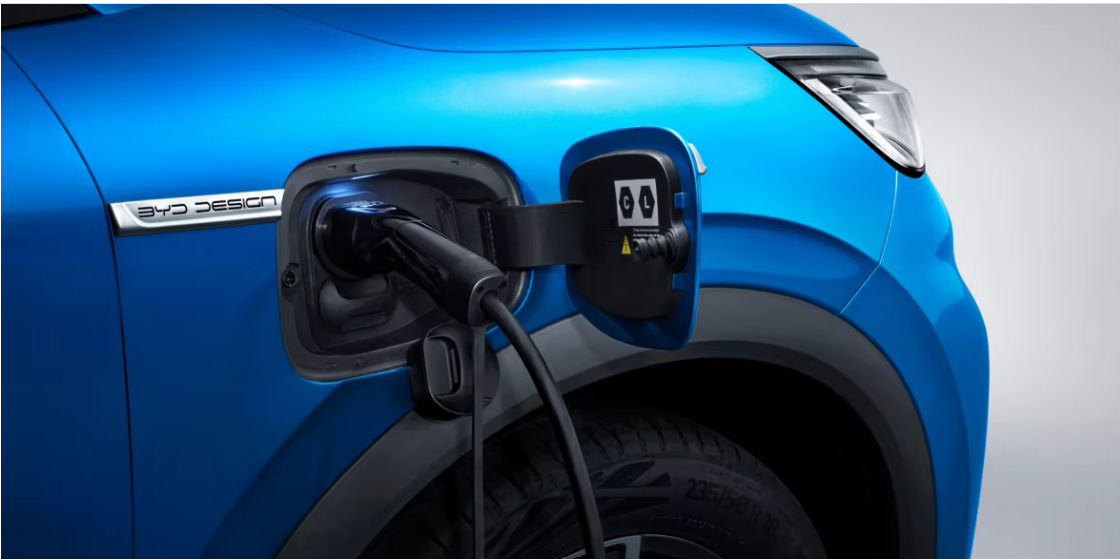
Request clear photographs of the actual vehicle’s AC and DC inlets and the matching charger plugs. Have the supplier identify the standards in writing. Do this for the specific import, not merely the model name, and ask the intended charging operator to confirm compatibility.
Do not buy an adapter on the assumption that physical fit guarantees a safe, working connection. Obtain explicit compatibility guidance from the vehicle and equipment suppliers. SafiVolt’s current dual-gun DC catalogue lists GB/T + GB/T connections, so check the vehicle before choosing that equipment.
Plan the parking space as well as the charger
Before ordering a home unit, arrange an assessment by a qualified electrician. Ask about available capacity, suitable equipment, protective devices, earthing, the cable route and whether any supply work is needed. This is a professional installation task, not a reason to improvise with an extension lead. The DOE home-charging guide also stresses assessing the electrical installation; its U.S. voltage and code details should not be applied as Kenyan requirements.
For an apartment or rented property, settle permission, bay access and electricity billing first. Get a quotation that separates the charger, installation and any upgrade work. A good hardware price does not tell you the finished site cost.
Have a plan for public charging
For a longer journey, confirm the connector, operating hours, payment method, access restrictions and current availability directly with the operator. Save a second compatible stop and avoid planning to arrive with no reserve. A pin on a map is not proof that a charger is working or available to your vehicle.
For your cost estimate, use billed kWh multiplied by the current all-in rate, then add any parking, session or idle charges. Use your own electricity bill or the operator’s current tariff, not an old internet headline.
Before buying, pair this plan with our real-world range guide. If you need help choosing hardware, send SafiVolt your vehicle and parking details.
General educational information from SafiVolt. Technical sources are linked in the article. Model specifications, battery condition, charging access, costs and support must be confirmed for your own circumstances; this guide does not replace professional inspection or installation advice.