
In this guide
Buying an EV for a Nairobi commute and an occasional coast trip involves two charging plans. Overnight charging can cover the normal working week, while the coast journey depends on the longest gap between chargers you can actually use. Check that gap before paying for a larger battery or committing to a car whose charging system does not fit the route.
Start with the actual route and destination
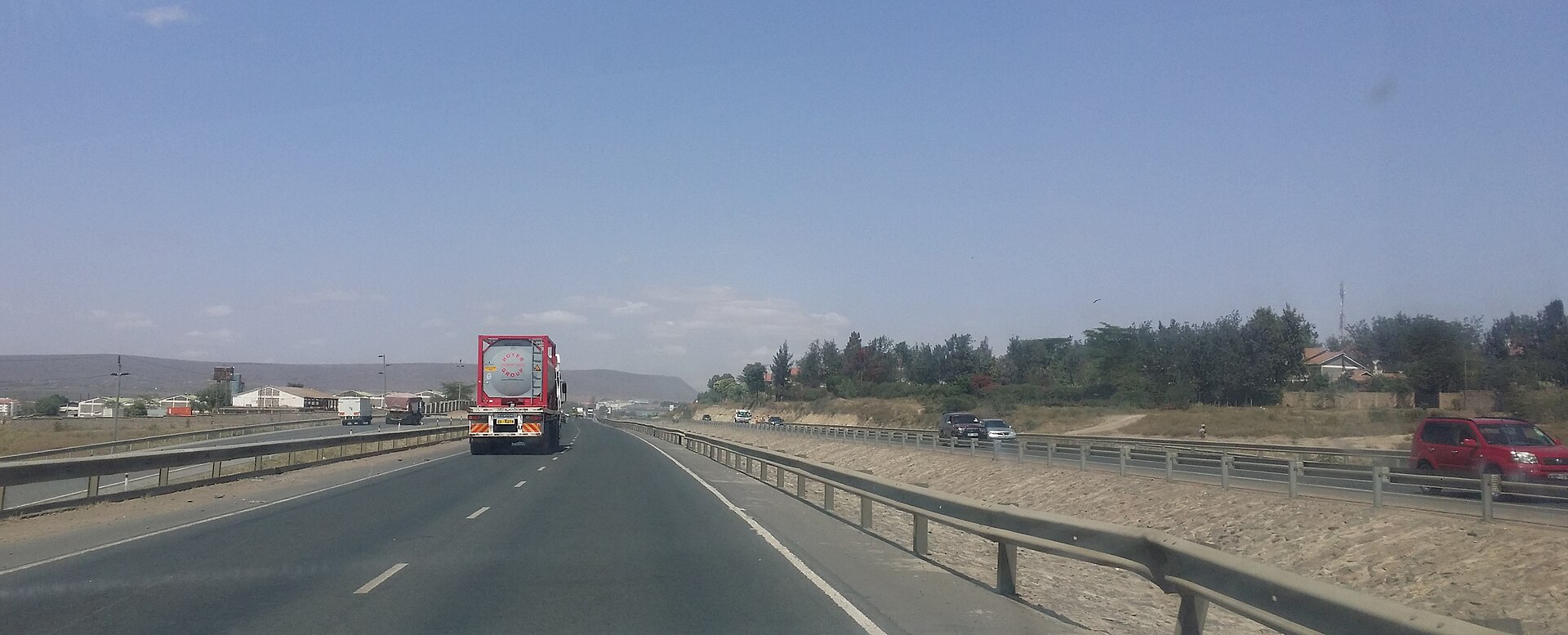
The Kenya National Highways Authority identifies the Nairobi to Mombasa road as the A8. Use current navigation for your own start and finish addresses, rather than borrowing a distance from a city-centre comparison.
A Nairobi departure, a stay in Mombasa town and a hotel farther along the coast are different journeys. Include the drive from the main road to your accommodation, local errands and the return to a charger. A confirmed charger at a hotel you are not staying at may have access restrictions.
Build a short route sheet: departure address, intended charging stops, distance between each stop, destination parking and a reachable alternative. Recheck it for the travel date. This guide provides a planning method, not an operator-confirmed charging itinerary.
Use the battery window you intend to drive
Ask for usable battery capacity and the consumption evidence for the exact variant. Calculate from your intended departure state of charge to a chosen arrival reserve. Set the reserve around the distance to a reachable alternative and the conditions; there is no single percentage that suits every car and route.
For an educational example, assume 60 kWh usable capacity, departure at 90% and a planned arrival at 20%. The driving window is 60 × (0.90 − 0.20) = 42 kWh. Those are hypothetical inputs, not specifications or road-test results for the MG4 or another listed car.
| Assumed battery consumption | Calculated distance |
|---|---|
| 18 kWh per 100 km | About 233 km |
| 20 kWh per 100 km | 210 km |
| 22 kWh per 100 km | About 191 km |
A proposed gap of 220 km fits the first row mathematically but exceeds the other two. Additional detours or a lower starting charge change it again. If the route cannot be supported with a reasonable margin, change the stop, arrange verified destination charging or choose another travel arrangement.
The US Department of Energy’s consumer guide advises allowing for hills, heavy loads and heating or air-conditioning use. Its American prices and connector examples should not be treated as Kenyan specifications.
Verify a car charger, its connector and your access
EVChaja directs drivers to its app map and explains its session-start process. Use operator information to identify a candidate, then confirm the exact unit and your vehicle’s compatibility before relying on it.
SupaChaja publishes driver access and charging-platform information. Ask which site and connector can serve your car on the day. A network supporting several standards does not mean every socket at every location supports them all.
Request the street location, AC or DC connector, available power, opening hours, visitor permission, payment method and support contact. Send your inlet photographs and exact model year if compatibility is uncertain. Confirm the manufacturer-approved equipment combination; an adapter that physically fits is not sufficient evidence.
A motorcycle battery-swapping site and a private bus depot are not automatically public car chargers. A proposed or newly announced installation also needs confirmation that drivers can now use it. Save the operator’s response and identify the last point where you can still choose a reachable alternative.
Budget time from average accepted power
If a session must add 30 kWh, the ideal time is 30 divided by average accepted kW. At a steady 7 kW that is about 4.3 hours; at a steady 50 kW it is 36 minutes. These examples exclude losses, setup, queues and changes in power. They are not charger or vehicle performance promises.
A high-power DC sign does not establish the average your car will accept. Ask about the vehicle’s charging curve and restrictions, and allow for the time spent leaving the route, parking and starting payment. An AC charger may be useful during a long meal or overnight stay but unsuitable for a short planned stop.
Build a KSh trip budget from the billed session
For an illustrative session billed at 30 kWh, an assumed KSh 40 per kWh gives KSh 1,200 and an assumed KSh 60 gives KSh 1,800. These rates are examples, not current operator quotations. Add any parking, session or idle fees. Count the electricity used from the departure charge when comparing the whole journey with petrol or diesel.
BasiGo’s charging terms require the customer to confirm the session price and describe access conditions, possible time-based charges and maintenance interruptions. Check the provider’s current terms and approval requirements for the site you intend to use.
Keep the energy bill separate from the value of time. For a business journey, include any extra driver hours and schedule impact. An EV that is convenient for daily depot work may require a different arrangement for an infrequent trip with a fixed arrival deadline.
Arrange charging where you will park at the coast
Ask your accommodation to confirm the equipment, connector, visitor access and reservation policy. If a property offers only an ordinary socket, have the vehicle equipment and electrical arrangement assessed by an appropriate professional before depending on it. Permission to park does not confirm a suitable charging installation.
Check whether overnight charging can replace the next day’s expected energy within the hours available. Agree who pays and what happens if another guest occupies the bay. Recheck the return journey separately, including the reserve needed to reach the first confirmed stop.
Choose the vehicle around how often you make the trip
Tell SafiVolt how many coast journeys you make each year, your usual passengers and luggage, and your available charging at both ends. Compare the exact variant’s usable battery and AC/DC capability with that route. A used EV also needs unit-specific battery and charging evidence.
For regular long trips where dependable charging cannot yet be arranged, compare a plug-in hybrid against the same purchase scope and work schedule. It still needs charging to make full use of its electric capability and an engine service budget. Choose from the route evidence and complete quotation, rather than a range headline alone.
Continue your research
Compare EV charging costs in KenyaPlan vehicle range and reservesCompare Atto 1 and MG4 variantsCompare electric and hybrid carsRD6, Shark 6 and Hilux buying comparisonCLEAR ANSWERS
Frequently asked questions
Can I drive from Nairobi to Mombasa in any electric car?
No. The exact vehicle must cover each confirmed charging leg with a reserve and use the available equipment. Check usable battery capacity, route consumption, charger compatibility and destination charging before deciding.
Does a 400 km brochure range prove the coast trip is possible?
No. The test cycle, route, load, starting charge and reserve matter. Calculate the longest confirmed leg using evidence for the exact variant and retain a reachable alternative.
How many charging stops will I need?
That depends on the vehicle, departure charge, route consumption and working compatible chargers. Do not fix the number of stops before checking the actual gaps and session times.
What will charging cost on the trip?
Use the confirmed session rate and billed energy, then add applicable fees and departure-charge energy. The KSh 40 and KSh 60 per kWh figures in this guide are hypothetical examples, not operator tariffs.
Can I use a motorcycle swapping station to charge my car?
Not unless the operator separately provides a compatible car charger and grants access. A swapping location or private fleet depot is not evidence of public car charging.
Sources and further reading
Last editorial review: 13 November 2026. The sources below support this guide. Prices, policy and tariffs can change; confirm the current terms before ordering.