
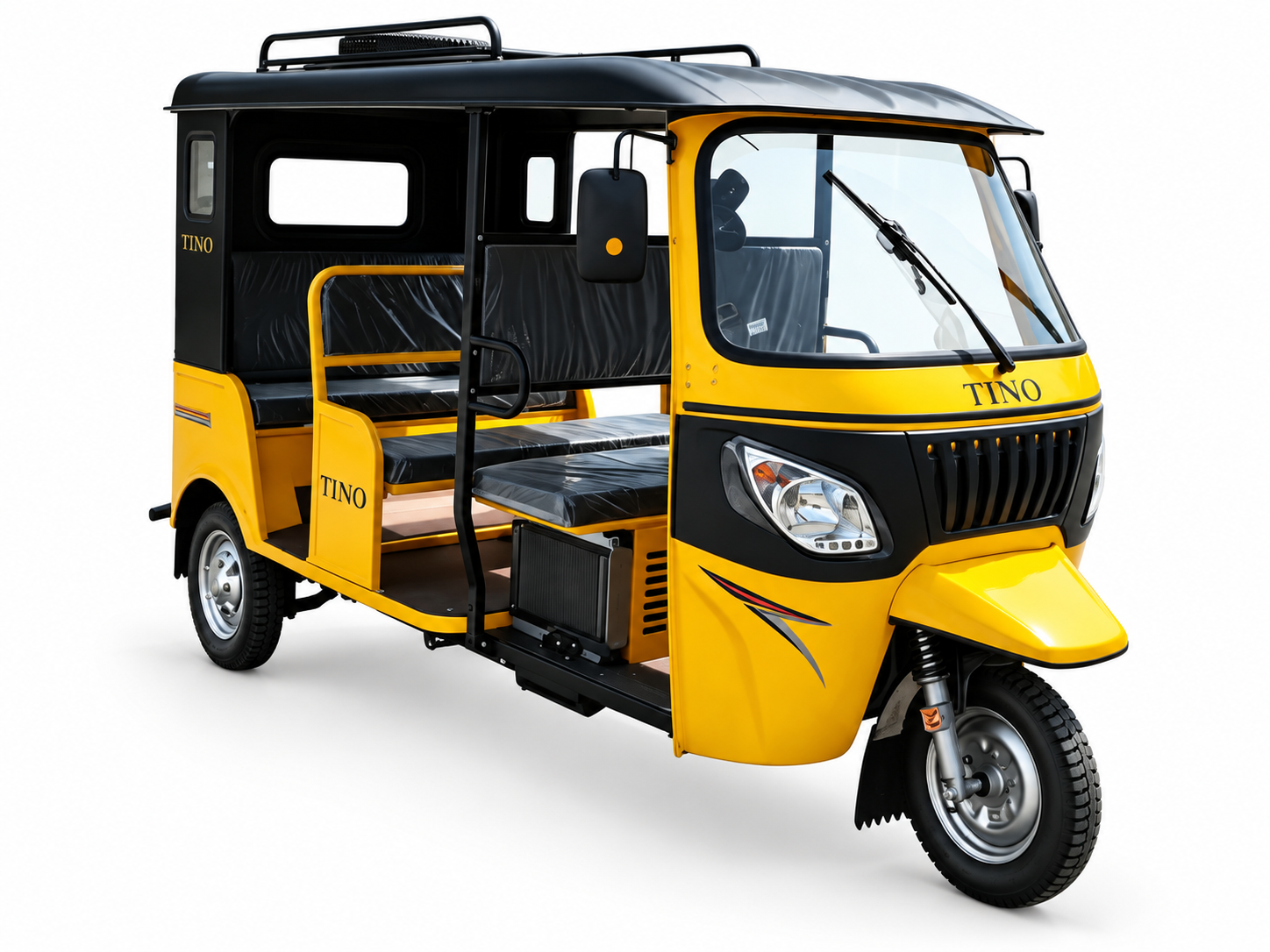
An electric tuk-tuk can serve passenger routes, hotels, campuses, estates, hospitals, resorts and community transport. For an operator or investor, its value comes from matching capacity to reliable demand—not simply buying the model with more seats.
Kenya’s wider three-wheeler market is substantial. The KNBS Economic Survey 2026 reports 10,478 newly registered three-wheelers in 2025, up 28.1% from 2024. That figure covers three-wheelers generally rather than electric units alone, but it shows the scale of the operating category an electric model enters.
Safari 6 versus Safari 9
SafiVolt currently lists the closed-cabin Safari 6 at a guide price of KSh 390,000 and the closed-cabin Safari 9 at KSh 410,000. The Safari 6 is configured for six passengers; the Safari 9 is configured for nine. Prices and final specifications must be confirmed for the exact order.
The KSh 20,000 guide-price difference is only one part of the choice. A longer, higher-capacity vehicle may earn more on a route that regularly fills the extra seats. On a lower-demand route, empty seats may add no revenue while manoeuvrability, parking and turnaround remain important.
Build the route economics before ordering
• Map the route length, stops, gradients, road surface and expected daily trips.
• Record passenger demand by hour instead of relying on a daily average.
• Estimate paid passenger-trips, not theoretical maximum seat capacity.
• Include charging time, driver shifts, cleaning, maintenance and unplanned downtime.
• Check where the vehicle can park and charge securely between operating periods.
A simple operating model starts with completed trips per day multiplied by average paid passengers and fare. From that revenue, subtract electricity, driver cost, finance, insurance, permits, tyres, routine service, repairs and a downtime reserve. Use conservative occupancy and allow for weak days.
Select capacity for the real duty cycle
The Safari 6 can suit estates, hotels, local feeder routes and services where compact size and frequent stops matter. The Safari 9 can suit campuses, staff movement, resorts and routes with dependable group demand. Capacity should be checked against local operating and licensing requirements for the intended service.
Ask SafiVolt to confirm the motor, battery, range, charging time, fitted equipment and warranty for the exact unit before paying a deposit. The current catalogue intentionally marks these items as confirmed to order because configurations can vary.
Treat charging as part of the timetable
The charging plan should state where the tricycle parks, how much energy it needs each day, who connects it and what happens if charging is interrupted. If several vehicles share a site, stagger charging or use load management so all units are ready without exceeding the available supply.
For battery swapping, EPRA’s guidelines call for battery-management systems, traceability, appropriate testing and trained personnel. A fleet should also define battery ownership, state-of-health monitoring, swap availability, damage responsibility and end-of-life handling in its contract.
What a fleet buyer should verify
• Passenger capacity and legal operating category for the intended route.
• Payload, gradient ability and representative range under the planned load.
• Brake, tyre, lighting, weather protection and passenger-access specification.
• Charging or swapping equipment, electrical requirement and daily turnaround.
• Parts list, diagnostic support, technician access and warranty process.
• Driver training, inspection routine and incident reporting.
Pilot one route before scaling
Run the first unit on a defined route and measure passenger demand, kilometres, electricity delivered, charging time, trip completion, maintenance and driver feedback. Compare the result with the vehicle it replaces or with the route’s current transport cost. A route-level pilot reveals operational issues that a showroom inspection cannot.
For a CEO or cooperative leader, the scale-up decision should use three thresholds: the vehicle completes the required service, unit economics work under conservative occupancy, and the support plan protects uptime. If any one fails, adjust the route, charging arrangement or specification before adding vehicles.
Request the right SafiVolt quotation
Tell SafiVolt the intended passenger capacity, route, daily kilometres, gradients, road conditions, operating hours and charging location. You can then compare the Safari 6 and Safari 9 on the same business requirements and receive confirmed order specifications.
Continue your research
View the six-passenger Safari 6View the nine-passenger Safari 9Compare SafiVolt passenger tricyclesRequest a route-specific quotationCLEAR ANSWERS
Frequently asked questions
How much is an electric tuk-tuk in Kenya?
SafiVolt’s guide prices on 29 September 2026 are KSh 390,000 for the six-passenger Safari 6 and KSh 410,000 for the nine-passenger Safari 9. Confirm the exact specification, availability and delivered scope before ordering.
Should I buy a six-seat or nine-seat electric tricycle?
Use measured passenger demand. The Safari 9 is stronger when extra seats fill consistently; the Safari 6 may suit routes where compact size, lighter demand and manoeuvrability matter more.
Can an electric tuk-tuk work for a hotel or campus?
Yes, when the route, passenger load, charging window and support plan fit the vehicle. Hotels, estates, hospitals, campuses and resorts can be suitable controlled-route applications.
What specifications should I confirm before buying?
Confirm motor, battery, representative loaded range, charging time, passenger capacity, payload, gradients, brakes, tyres, weather protection, warranty, parts and service support for the exact unit.
Sources and further reading
Facts and context were checked against the linked sources on 29 September 2026. Figures can change as new disclosures and tariffs are published.